 i · Ask
Project · No. I
Israel in Numbers
Israel’s official statistics can help you choose where to live, and show how the country has changed since 2003.
Israel’s Central Bureau of Statistics publishes figures on every town in the country: how many people live there, how its pupils do in their final exams, how fast it is building. This project brings twenty years of those figures into one dataset and joins them with road distances, house prices and election results from other sources. Both tools below draw on it.
IWhere to Liveאיפה לגור
i · Ask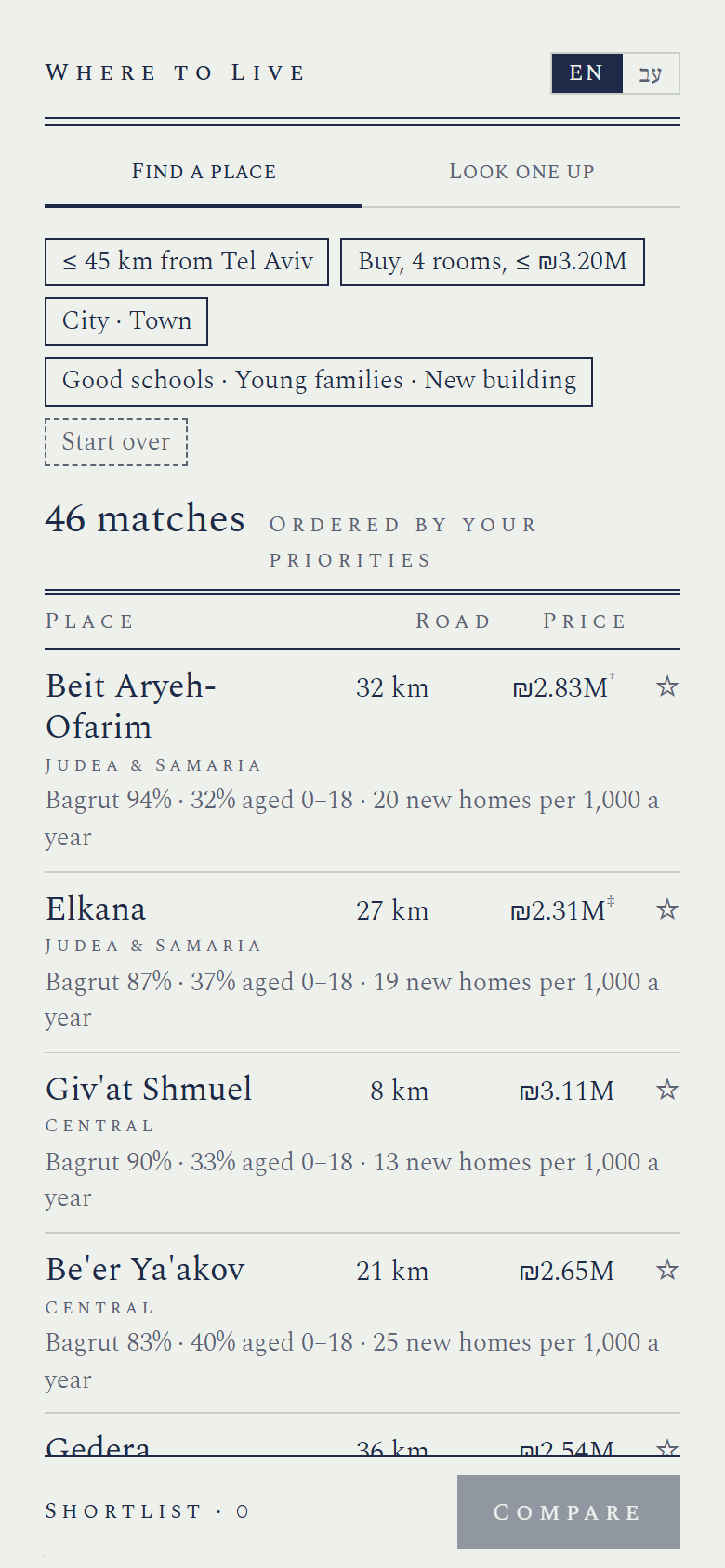 ii · Matches
 iii · A place
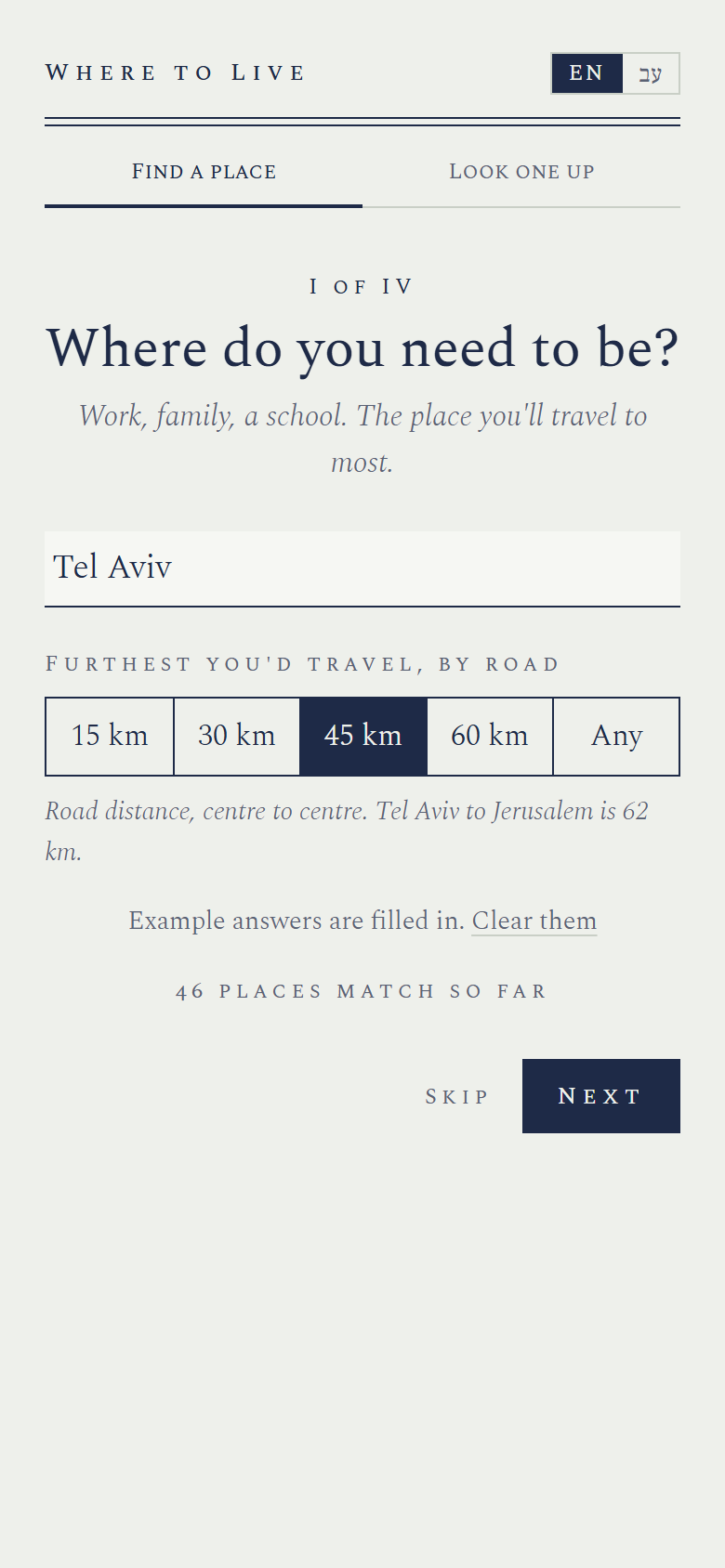
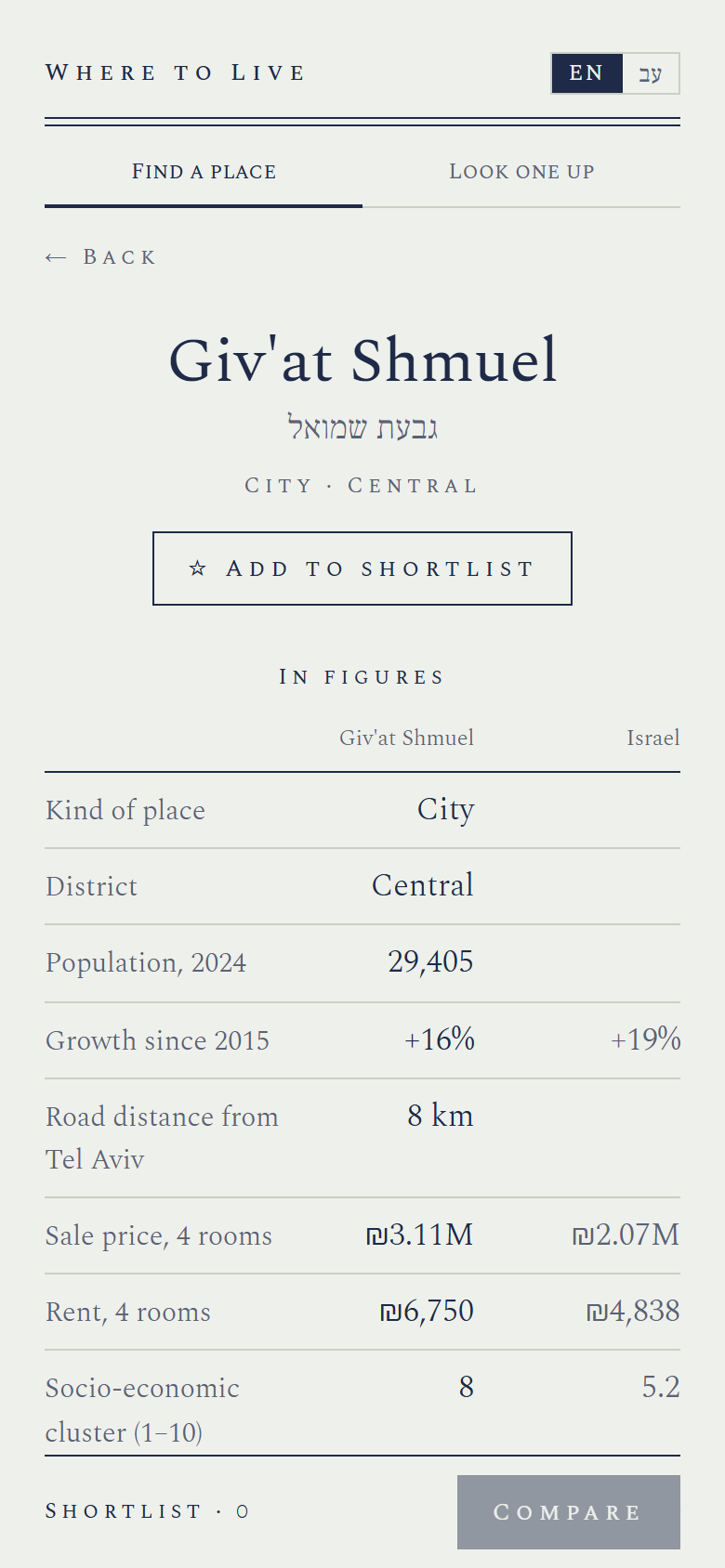
Where to Live is for anyone choosing a town in Israel. Tell it where you need to be, what you can spend and what matters to you. It lists every place that fits, gives the reason each one made the list, and leaves the choice to you. You can also look up any of the 1,186 places and see how it compares with the country as a whole.
IIIsrael in Motion
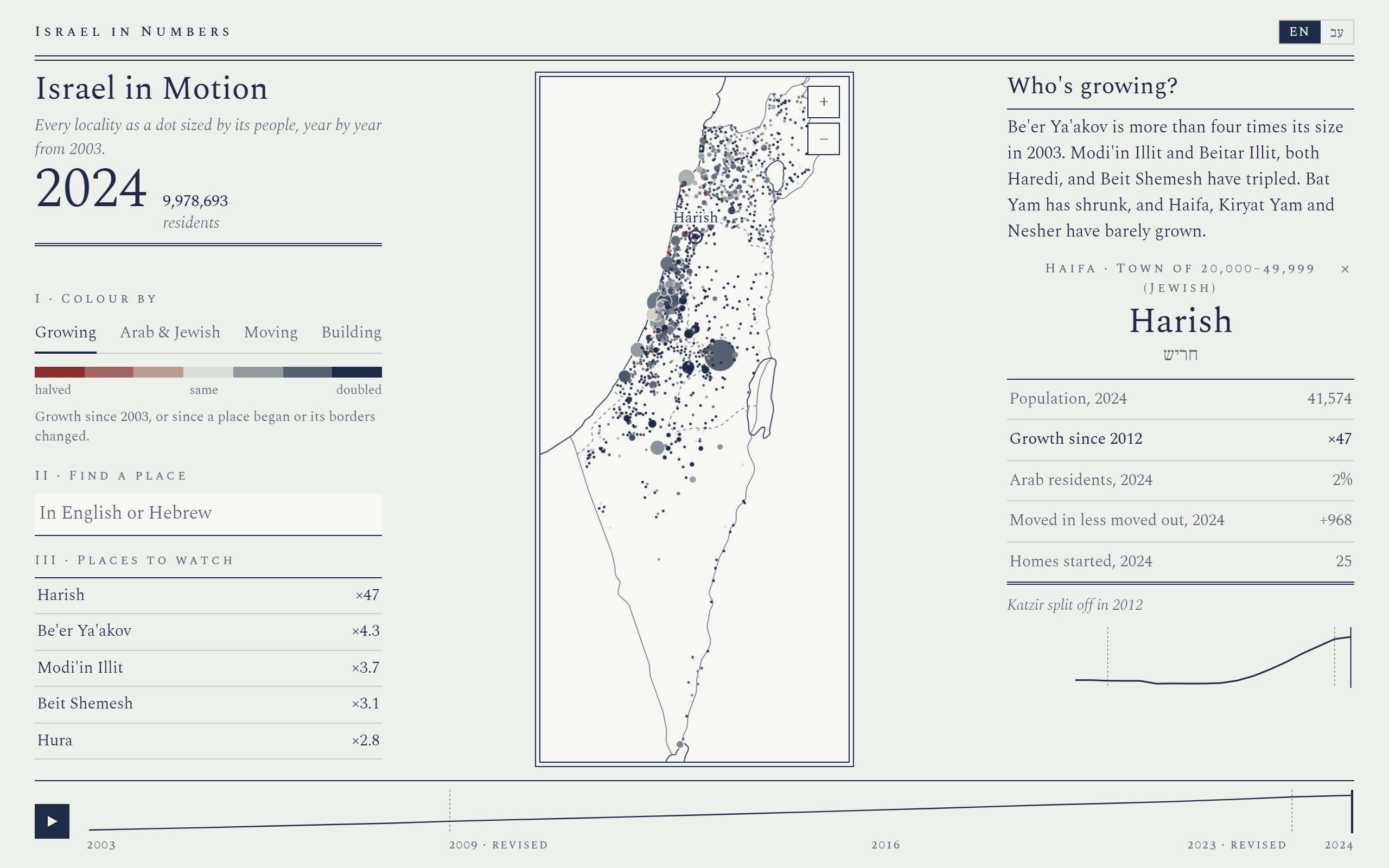
Israel in Motion shows how the country has changed since 2003. Every town is a dot on the map, sized by its population, and the map plays forward one year at a time. You can colour the dots by growth, by the share of Arab residents, by people moving in or out, or by how much is being built. Some changes stand out at once. Harish has 47 times as many people as it did in 2012, and the Haredi towns of Modi’in Illit and Beitar Illit have both tripled since 2003.
About the data
- Sources
- Central Bureau of Statistics; data.gov.il for road distances and election results; nadlan.gov.il for house prices and rents; the Masorti Movement; Wikidata for English place names
- Coverage
- Every town and village from 2003 to 2024. Sale prices cover 147 towns, home to 83% of Israelis; most of the gaps are Arab and Bedouin towns.
Corrections and comments: feedback@tzvi.net